Do Americans Care About Foreign Suffering?
Same Flood, Same Family, Half the Help

It’s been just over a year since the Trump administration formally shuttered the United States Agency for International Development (USAID) and canceled tens of billions of dollars in development assistance.
At the time, people who work in or study international development – myself included – were up in arms. USAID is a pillar of who we are as a nation!
A year later, I think it’s safe to say that in terms of the American political agenda, USAID’s demise hardly registers. I can’t imagine anyone running in the upcoming mid-term elections will be campaigning on the need to resuscitate the agency.
Why the apathy? Sure, many folks, including those from within USAID conceded that there were inefficiencies, and contradictions in development work. But there were also tons of wins and we’ve seen ongoing reports of the human toll from the loss of assistance.
Of course, many factors weigh in here, including 18 months of the current administration flooding the public agenda with so much change (and mayhem) that it’s been difficult to stay focused on any single issue. Most bandwidth for foreign policy has been taken up with war.
And yet, I believe a big part of the answer is that Americans themselves tend to draw very sharp lines along our borders when it comes to their sense of obligation to prevent human suffering. As a country, overall, we just don’t seem to care that much.
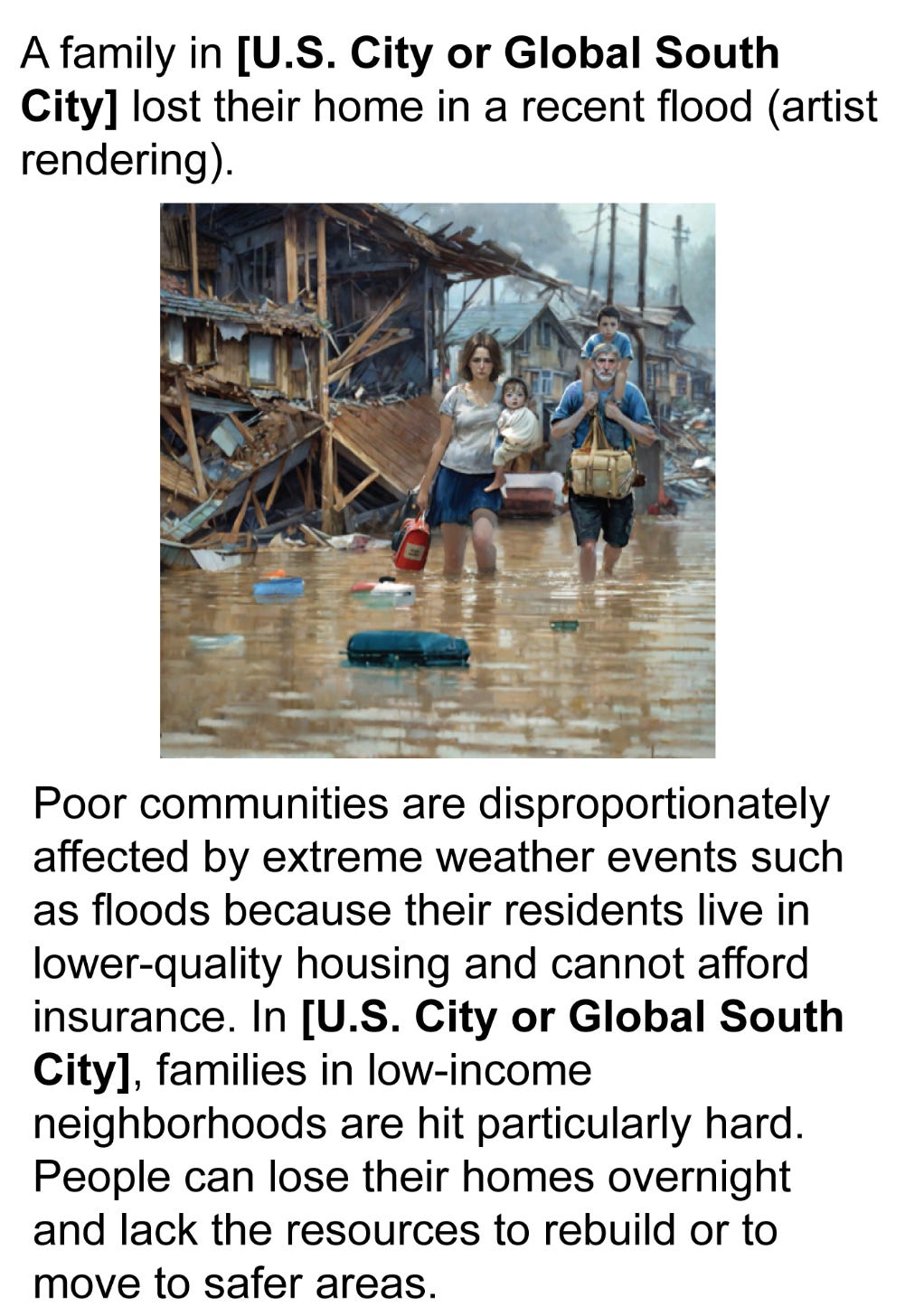
I say this based on the results of a study I conducted with Volha Charnysh, Jared Kalow, and Erin Walk in the years just before the start of the second Trump administration. We showed thousands of Americans the same artist rendering of flood-victim families, with the same description of their plight.
When we told participants that the victims lived in a South African or a Brazilian coastal city their support for government-provided assistance and willingness to make personal donations was not even half as generous as the otherwise similar group who were told the victims lived in an American coastal city. The recommended assistance dropped from $37 to $15.
Whether that finding is surprising or upsetting depends on your vantage point.
Some will say, of course Americans will support other Americans more than they will support… others. And I agree that proximity matters a lot. I’d clearly do more to prevent the suffering of my own kids than other people’s kids. But the extent of the drop-off is striking, especially on a survey in which respondents might at least pretend to care more about foreigners, and we are talking about a fictional family that is not know to the respondents.
It is also true that not all Americans think about these issues in the same way. Climate change and foreign assistance have become highly polarized issues along party lines in recent years, and this was resoundingly clear in our survey results.
Overall, about one-third of Republicans said that the U.S. should not contribute any money to a climate aid fund to support people overseas, while less than 5 percent of Democrats preferred no aid. Moreover, the mention of a Global South victim had a substantially larger penalty on Republican support.
To be clear, I don’t think Republicans intrinsically care less about people overseas. Not so long ago, Republican President George W. Bush launched PEPFAR, probably the most successful and life-saving American foreign aid program of all time.
But citizens are affected by elite signaling, and in recent years, under Trump’s leadership, the Republican signal has been America First and denial of the existence, let alone the consequences, of climate change, especially for people in other countries.
Foreign policy is not just a reflection of public opinion, and until we have a change in government leadership, development assistance will remain dormant. But in the meantime, there’s work to be done to remind Americans of our human connections to those around the world, and the pride that can be associated with helping to avert misery when we do so effectively.
I can not agree less Prof.
In some cases, Aid for development in the real sense of it doesn't truly aid development. For instance in places like Africa. Development aid from international partners get mismanaged and sometimes looted and find their ways to the very countries where the aid comes from hidden in offshore accounts.
If there's gonna be aid at all, it should be on a project basis and interventionist and not a permanent aid.
Then, how do we explain the roles some aid has also played in empowering some non-state actors in the major conflict centers in Africa for instance. Is it not surprising to find out during the congressional hearing that some of the aid funds and materials finds their way to some prescribed groups inflicting violence on the innocent people in West Africa.
Then finally, what does United States and other international aid fund donors gains in return from the very poor countries they are donating to? Soft power? Assymetry treaties and agreements?
Thank you Prof for this wonderful work.