
Over the summer, I’ve been researching industrial policy and its potential role in African development. A recent World Bank study highlights that in a slow growth world, more governments are considering a return to more deliberate policy to spur particular economic activities after a few decades during which the idea of a more interventionist state was very much out-of-vogue.
I’m not ready to say whether it is a good or bad idea to encourage such industrial policy, including my own focus – “green” industrial policy. But the work got me thinking: industrial policy towards what end? What would “successful development” look like?
A small cottage industry has generated various metrics as a way of answering this question, including the Human Development Index, the World Happiness Report, and the Flourishing Measure. Still, there’s no one perfect answer to what success should look like. The most widely used indicator remains GDP per capita: the size of the economic pie divided by all of the people who want a slice.
Outside of Africa, and based on such measures and conventional wisdom, a few models of successful development prevail: Sweden (maybe all of Scandinavia), China, Singapore, Costa Rica, and yes, the United States! All have enjoyed some notable prosperity, but they vary along several dimensions, including wealth and income distribution, how much freedom citizens enjoy, and the types of social safety nets available to those when the chips are down. Reasonable people might disagree about how to rank these, but they are all solid candidates.
For those of us who teach on African politics and development, we usually point to Botswana as a success story – or sometimes the success story – of the continent. Nobel Laureate James Robinson wrote several papers highlighting the country as a model. Robert Rotberg, a veteran Africanist, made Botswana a centerpiece of his recent book.
Many of the hallmark features of the country undergird the reputation: No ethnic strife on a continent with lots of it. Lots of economic growth where there’s been very little of it. A very successful diamond industry business on a continent where such natural resources are frequently a source of violent conflict. And a pretty competent and professional bureaucracy.
But as a “model” of success – is this really what other countries should be striving for?
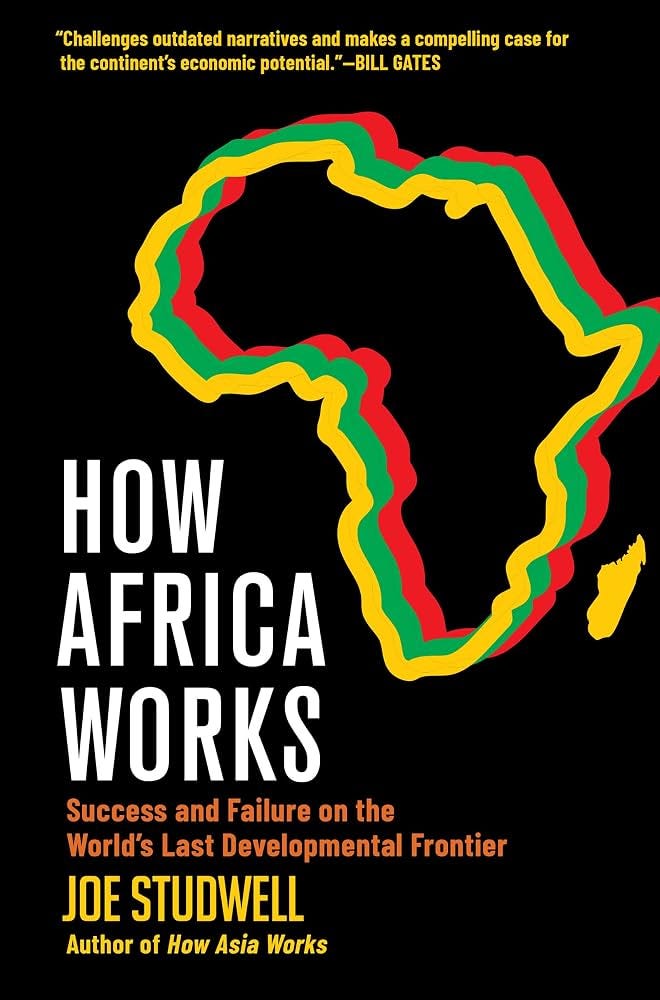
As part of my industrial policy review, I’ve been reading Joe Studwell’s How Africa Works (he was the author of, among other things, How Asia Works), and while he highlights Botswana as a success story, he also makes several key points that are pretty jarring:
Botswana was 6th from the bottom of all countries on the World Happiness Report.
Alongside South Africa, it has a GINI coefficient over 50, making it one of the most unequal countries on the planet.
While poverty rates were cut to 19 percent by 2010 (quite good comparatively for the continent), another 30 percent of the population is “close” to poverty.
Apart from some diamond cutting and processing, the country hosts virtually no industrial development – manufacturing accounts for less than 5 percent of the economy.
150,000 of the country’s 340,000 formal sector jobs are government positions.
And to that list, I’d add that – while calm and safe – Botswana does not give off a vibe of profound dynamism. Its largest city, Gaborone, contains about 250,000 people, and it’s not a hive of entrepreneurialism.
Meanwhile, the other success stories in Africa, according to Studwell, are Mauritius, Ethiopia, and Rwanda, each with some notable strengths and dynamism in recent years. Still, each is also characterized by its own severe shortcomings in terms of other potentially desirable qualities, such as democratic freedoms, security, and peaceful co-existence.
I’ve enjoyed Studwell’s book. He draws heavily on existing scholarship and it’s not full of surprises, but his background in Asian studies prompts him to ask good questions about the African cases and to offer some fresh insights. He reminds us that this set of success stories are mitigated successes! And indeed, not too many Africans clamor to be like Botswana, Ethiopia, Rwanda or Mauritius.

In turn, I’m left pondering the profound challenge of advancing policies in a neighborhood without really strong models of what’s possible.
Most importantly, it creates a sense of hopelessness among those trying to do something new because the stock answer is: this always fails in Africa.
Successful industrial policy will need good politics: A vision of what success looks like that involves a hybrid of African and non-African examples, some imagination, and pragmatism. Hopefully the sequel to How Africa Works will feature some more inspiring success stories.
I agree very much Botswana is overrated and absolutely impossible to copy anyway for most SSAs countries,the problem is that there's not a single success story to copy not one not in SSA and not in their diaspora
Interesting reflections, Evan! You may be interested in the success stories volumes edited by Prof. Augustine Fosu:
https://academic.oup.com/book/25349
https://academic.oup.com/book/33067
Godspeed!